
Health, Safety, and Hygiene in Childcare – What Educators Need to Know
Health, safety, and hygiene are central to everyday practice in early childhood education. Every interaction, routine and environment within a childcare service contributes to how safe and well children feel.
For educators, this goes beyond following procedures. It involves constant awareness, professional judgement, and the ability to respond to changing situations in real time.
These responsibilities are embedded in the National Quality Standard (NQS), particularly Quality Area 2 – Children’s Health and Safety, which focuses on protecting children from harm, promoting wellbeing, and maintaining safe environments.
What does health, safety and hygiene mean in childcare?
In a childcare setting, health, safety and hygiene refer to the systems and practices used to protect children from illness, injury and harm.
This includes maintaining clean environments, supervising children effectively, managing illness, ensuring safe sleep practices, and identifying risks before they lead to incidents.
Rather than being separate tasks, these responsibilities are integrated into daily routines — from handwashing and meal times to outdoor play and rest periods.
How do educators maintain hygiene and prevent illness?
Young children are particularly vulnerable to illness due to developing immune systems and close-contact environments. Because of this, hygiene practices are essential in reducing the spread of infection.
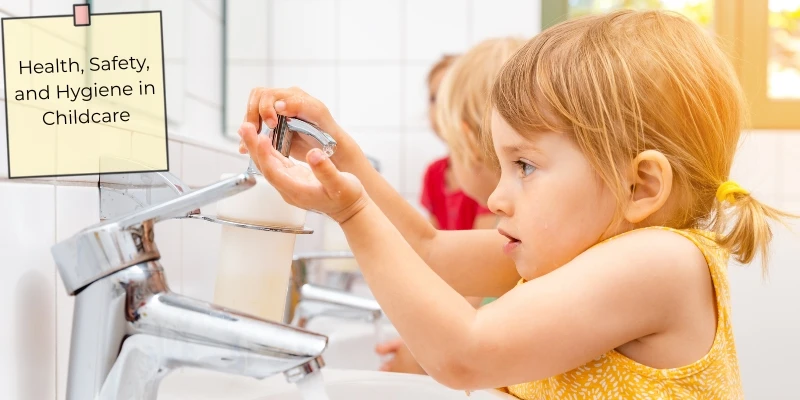
In practice, this includes regular handwashing, cleaning and disinfecting surfaces, managing bodily fluids safely, and ensuring that toys and equipment are kept clean.
Equally important is modelling good hygiene. When educators demonstrate and reinforce routines such as handwashing before meals or after toileting, children begin to develop lifelong health habits.
How is illness managed in childcare settings?
Managing illness in childcare involves balancing the needs of the individual child with the wellbeing of the wider group.
When a child becomes unwell, educators must recognise symptoms early, respond appropriately, and follow service policies regarding exclusion periods and parent communication.
Clear procedures help ensure consistency. These typically include isolating unwell children where appropriate, notifying families promptly, and maintaining accurate records of symptoms and incidents.
These practices are designed not only to support the child who is unwell, but also to prevent the spread of illness throughout the service.
What role does supervision play in safety?
Supervision is one of the most important ways educators protect children from harm. Effective supervision is not just about being present — it involves actively monitoring, anticipating risks, and positioning yourself to respond quickly.
Different environments require different supervision strategies. For example, outdoor play areas, transitions between spaces, and water play all require heightened awareness and planning.
Strong supervision reduces the likelihood of incidents and ensures that children are supported in a safe and responsive environment.
Why are safe sleep practices critical?
Safe sleep is a critical area of health and safety, particularly for infants. Educators must follow current safe sleep guidelines to reduce the risk of harm during rest periods.
This includes placing babies on their backs to sleep, ensuring sleep environments are free from hazards, and maintaining close supervision during rest times.
Safe sleep practices are regularly assessed under the NQS and are a key focus for regulatory compliance.
How do educators identify and manage risks?
Risk management in childcare is about identifying potential hazards before they lead to injury or harm. This includes both physical risks, such as equipment or environments, and situational risks, such as transitions or group dynamics.
Educators are expected to assess risks continuously and adapt environments or activities as needed. This might involve adjusting supervision, modifying equipment, or changing how an activity is delivered.
Importantly, risk management does not mean removing all challenges. Instead, it involves creating environments where children can explore and learn safely.
How health, safety and hygiene link to the NQS
Health, safety and hygiene are strongly connected to Quality Area 2 – Children’s Health and Safety within the National Quality Standard.
This includes protecting children’s health, ensuring effective supervision, managing incidents and emergencies, and maintaining safe environments.
These practices also support other quality areas, including relationships, programming and partnerships with families.
Health, Safety and Hygiene in Childcare – FAQs
Our Other Sites


Childcare Sites


Reviewed and updated: 12 May 2026