
Child Care Guide Blog
Practical, Evidence-Based Guidance for Parents, Carers and Educators
The Child Care Guide Blog brings together practical, research-informed articles about child development, behaviour, mental health, learning, parenting and early childhood education. Each post is designed to answer the questions adults commonly have about how children think, feel, learn, communicate and respond to the world around them.
Rather than offering quick fixes or one-size-fits-all parenting advice, the blog looks at the developmental processes underneath children’s behaviour and wellbeing. Articles draw on child development, developmental psychology, neuroscience, education and mental health research, while remaining clear and accessible for families.
Whether you are trying to understand a difficult behaviour, support your child’s emotional development, learn more about ADHD or anxiety, or make sense of an early learning approach, the Child Care Guide Blog is designed to help you find reliable information in practical language.
Advertisement
Browse the Child Care Guide Blog
Child Care Guide Blog Topics
Explore our collection of child behaviour blogs, organised into clear topics to help you quickly find what you need. Each topic groups together posts that share the same theme — whether it’s emotional regulation, anxiety, play development, or behaviour strategies. Browse through the categories below to learn more about how children think, feel and grow, and find practical tools you can use at home.
- Anxiety, Stress & Transitions (1)
- Autism & ADHD Support (1)
- Behaviour & Parenting Strategies (3)
- Child Behaviour (1)
- Child Development (2)
- Early Childhood Neuroscience (2)
- Emotional Regulation (0)
- Neurodiversity (0)
- Play & Brain Development (1)
- Social & Emotional Development (1)
Child Care Guide Blog Cloud
If you are looking for something specific, our tag cloud highlights the key ideas, behaviours and concepts covered across our blogs. Tags help you dive deeper into related posts, discover patterns across child development, and quickly access strategies or themes you’re curious about. Simply click any tag to explore all posts connected to that idea.
ADHD Anxiety Attachment Attachment Theory Biting Brain Development Calming Strategies Challenging Behaviour Child Anxiety Child Behaviour Child Development Child Mental Health Co-Regulation Decision Making Early Childhood Emotional Development Emotional Regulation Executive Function Learning and Attention Meltdowns Nervous System Neurodevelopment Parent-Child Connection Parenting Physical Play Rough-and-Tumble Play Secure Attachment Sensory Processing Separation Anxiety Social Skills Tantrums Toddler Behaviour Toddler Development
Latest Child Care Guide Blogs
- Why Does My Child Have Tantrums and Meltdowns? Understanding Emotional Regulation
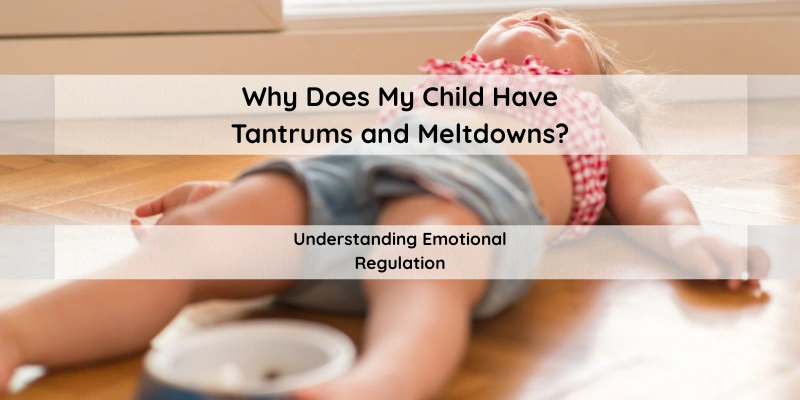 Tantrums and meltdowns often happen when strong emotions, frustration or sensory demands exceed a child’s ability to regulate. Learn why children become overwhelmed, how tantrums differ from meltdowns and what parents can do to help.
 - Parts of a Child’s Nervous System: A Parent-Friendly Guide to How Children React, Feel, and Respond
 A child’s nervous system influences how they process sensations, respond to stress and regulate emotions and behaviour. Learn how the brain, autonomic nervous system and sensory systems work together — and what parents can do to support regulation.
 - Attachment Theory – A Parent-Friendly Guide
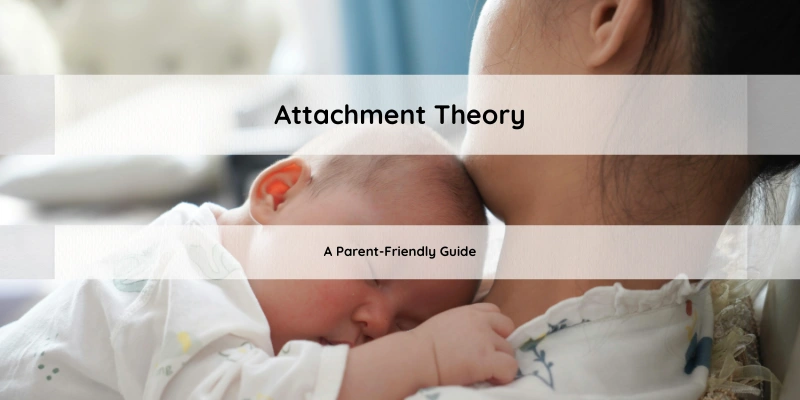 Attachment theory explains how children develop emotional bonds with caregivers and use those relationships as a secure base for exploring the world. Learn what secure attachment really means, why perfect parenting is not required and how everyday connection and repair support healthy development.
 - Why Rough and Tumble Play is Essential for Toddlers (Backed by Neuroscience)
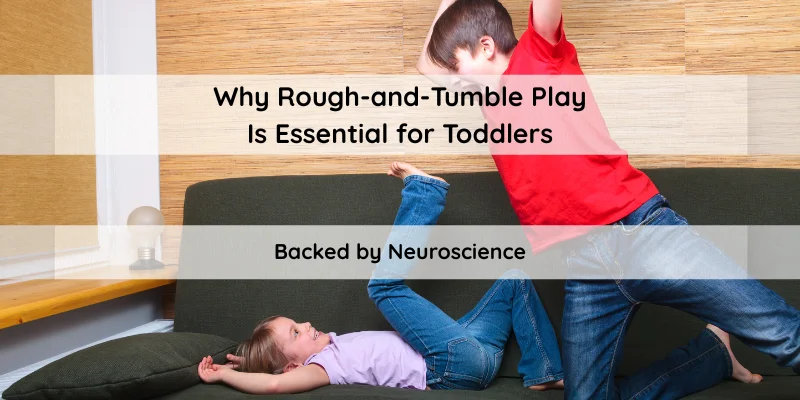 Rough-and-tumble play isn’t “bad behaviour” — it’s brain-building. Wrestling, chasing and climbing activate deep mammalian play circuits described by Jaak Panksepp, helping toddlers develop social skills, emotional regulation, resilience and a stronger bond with their caregivers.
 - How Slow Counting Helps Children Calm Down: The Neuroscience Explained
 Why does counting to ten sometimes help an overwhelmed child calm down? Slow counting creates a pause, redirects attention and can encourage slower breathing, giving children time to regain emotional control.
 - Too Many Choices Can Make Children Anxious – Here’s Why (and What Parents Can Do)
 Choices can support independence, but too many options can overwhelm a young child. Learn why decision-making can become difficult and how simple, bounded choices can reduce frustration and make everyday routines easier.
 - Why Toddlers Bite
 Toddler biting can be upsetting, but it is often connected to frustration, limited language, excitement, teething or developing impulse control. Learn why toddlers bite, how parents and educators should respond and what can help stop the behaviour.
 - Signs of Anxiety in Young Children
 Anxiety in young children does not always look like fear or worry. It can appear as anger, clinginess, avoidance, stomach aches, sleep problems or perfectionism. Learn the subtle signs parents can easily miss and when your child might need extra support.
 - ADHD and the Developing Brain: What’s Really Different in Children
 Why can a child with ADHD focus for hours on something they love but forget an instruction moments later? Explore how the developing ADHD brain manages attention, motivation, impulses, working memory and emotions — and why understanding these differences can help parents respond more effectively.
Advertisement
What can I learn about on the Child Care Guide Blog?
The blog covers a wide range of topics relating to children’s development, wellbeing and education.
You will find articles exploring child behaviour and emotional regulation, including tantrums, meltdowns, aggression, frustration, boundaries and the development of self-control.
There is also a strong focus on child mental health and neurodevelopment, with parent-friendly explanations of ADHD, anxiety, autism, depression, OCD, trauma and other conditions that can influence how children experience everyday life.
Articles about learning and development explore areas such as executive functioning, attention, language, literacy, learning disorders and the way children’s brains develop over time.
The blog also includes guidance relating to childcare and early education, helping families understand different approaches to early learning, developmental expectations and the environments that support children’s growth.
The aim is to help adults understand not only what children are doing, but why a behaviour, difficulty or developmental pattern might be occurring.
How can the blog help me understand my child’s behaviour?
Children’s behaviour is often the most visible part of a much larger developmental process.
A child who refuses a task might be overwhelmed, anxious, frustrated or unsure how to begin. A child who becomes aggressive might lack the regulation skills needed to manage an intense emotion. A child who appears not to listen might be distracted, overloaded or struggling to hold instructions in working memory.
This does not mean that every behaviour should be excused or that children do not need boundaries. It means that effective responses usually begin with understanding what is driving the behaviour rather than reacting only to what adults can see.
Our child behaviour articles explore these patterns in detail and help parents distinguish ordinary developmental behaviour from signs that additional support might be useful.
Why does child development matter when understanding behaviour?
Children are not small adults. Their brains, language, emotional regulation and social understanding are still developing.
A behaviour that would be concerning in an older child might be developmentally expected in a toddler. Similarly, an expectation that seems simple to an adult might require planning, impulse control, working memory or emotional regulation that a young child has not yet fully developed.
Understanding development helps parents set realistic expectations without abandoning boundaries.
Many everyday parenting difficulties become easier to understand when behaviour is viewed through the child’s developmental stage rather than solely through obedience or discipline.
What will I find about child mental health?
The blog includes detailed, parent-friendly articles explaining common childhood mental health and neurodevelopmental conditions.
Topics include:
- ADHD in Children
- Anxiety in Children
- Autism Spectrum Disorder in Children
- Depression in Children
- OCD in Children
- Oppositional Defiant Disorder in Children
- Specific Learning Disorder in Children
- Tic Disorders and Tourette Syndrome in Children
- Trauma and PTSD in Children
You can also begin with our broader Child Mental Health guide if you are unsure which condition or concern is most relevant.
These articles are designed to help parents recognise patterns, understand terminology and know when professional assessment may be appropriate, rather than encourage self-diagnosis.
What will I find about ADHD, learning and the developing brain?
One of the major themes of the Child Care Guide Blog is how children’s developing brains influence everyday behaviour and learning.
Articles explore concepts such as executive functioning, working memory, impulse control, attention, motivation and emotional regulation.
For example, our article ADHD and the Developing Brain explains why a child with ADHD might focus intensely on something interesting while struggling to begin homework, forget an instruction moments after hearing it or react before they have had time to think.
Understanding how the developing brain works can help parents replace assumptions about laziness or deliberate misbehaviour with more effective strategies and realistic expectations.
How are the blog articles organised?
The Child Care Guide Blog can be explored through categories and tags.
Categories group articles into broader subject areas. Depending on the topics covered across the site, these might include areas such as child behaviour, child mental health, development, learning, parenting or early childhood education.
Tags connect more specific ideas across different articles. A tag such as Emotional Regulation, ADHD, Anxiety, Brain Development or Executive Function can help you find related posts even when they belong to different categories.
This means you can browse broadly when you want to learn about a subject or follow a specific issue when you already know what you are looking for.
Each article is written to stand alone while also linking naturally to more detailed guides and related topics across Child Care Guide.
Do I need to read the articles in any particular order?
No.
Many parents arrive at Child Care Guide because of one immediate question: Why has my child suddenly started having tantrums? Why can they focus on games but not schoolwork? Is this anxiety or ordinary fear? When should I be concerned about a developmental difference?
You can begin with the article that best matches your concern and follow the related links from there.
Other readers prefer to explore a broader topic such as child mental health or emotional regulation before moving into specific conditions.
There is no required pathway. The blog is designed to help you move between individual questions and broader developmental explanations as your understanding grows.
Who is the Child Care Guide Blog written for?
The blog is written primarily for parents and carers, with practical explanations that do not require a background in psychology, education or child development.
The content can also be useful for:
- early childhood educators
- teachers
- childcare professionals
- students
- grandparents and extended family
- other adults supporting children.
Where technical concepts are important, they are explained in everyday language rather than removed entirely.
The goal is to make high-quality child development and mental health information understandable without oversimplifying the science behind it.
Is the information on Child Care Guide evidence-based?
The aim of Child Care Guide is to provide information consistent with established research and recognised guidance in child development, psychology, mental health and education.
Where appropriate, articles draw on information from Australian and international health organisations, professional guidelines and research literature.
Child development is complex, however, and research does not always produce one simple answer that applies to every family.
For this reason, articles aim to distinguish strong evidence from general guidance and avoid presenting fashionable parenting claims as established science.
Evidence-based parenting information should help families make informed decisions without suggesting that there is one perfect way to raise or support every child.
Does Child Care Guide provide medical or psychological diagnoses?
No. The information on this site is educational and should not replace an individual assessment from an appropriately qualified professional.
Many childhood conditions share symptoms. Difficulties with concentration, anger, sleep, school attendance or emotional regulation can have several possible explanations.
A website can help parents understand possibilities and prepare useful questions, but diagnosis requires consideration of the individual child’s development, health, history and functioning.
If you are concerned about your child’s mental health, development or behaviour, a GP, psychologist, paediatrician or other suitably qualified professional can help determine whether further assessment is needed.
When should I seek professional help for my child?
Consider seeking professional advice when emotional, behavioural, developmental or learning difficulties are persistent, worsening or interfering significantly with everyday life.
This might include changes affecting:
- school attendance or learning
- friendships
- sleep
- eating
- family relationships
- independence
- emotional wellbeing
- physical safety.
Parents should seek more urgent help when a child is experiencing self-harm, suicidal thoughts, serious aggression, severe mental health deterioration or an immediate threat to safety.
You do not need to know exactly what is wrong before asking for help. Recognising that your child is struggling is enough reason to begin the conversation.
Why does Child Care Guide focus on understanding rather than quick fixes?
Children’s behaviour rarely has one simple cause.
A strategy that works for one child might fail completely for another because their age, temperament, developmental abilities, environment and underlying needs are different.
Quick behavioural advice can also fail when adults are treating the visible behaviour without understanding what is maintaining it.
A child who refuses homework because of an unidentified learning disorder needs a different response from a child avoiding homework because of anxiety. A child experiencing a sensory meltdown requires different support from a child testing a familiar boundary.
Understanding the reason behind a behaviour allows parents and educators to choose strategies that address the actual problem rather than repeatedly reacting to its symptoms.
How does Child Care Guide approach parenting advice?
The Child Care Guide Blog does not assume that every behavioural difficulty is caused by parenting.
Children differ biologically and developmentally, and conditions such as ADHD, autism, learning disorders and tic disorders cannot be explained simply by discipline or parenting style.
At the same time, parents are enormously important because relationships, routines, communication and responses to behaviour influence how children learn to regulate themselves.
The aim is therefore neither to blame parents nor pretend that adult responses do not matter.
Parents are not expected to be perfect; they need practical information that helps them respond more effectively and repair relationships when things go wrong.
What does a child-centred approach mean?
A child-centred approach attempts to understand situations from the child’s developmental perspective while still recognising the needs of parents, siblings, educators and the wider family.
It asks questions such as:
What skill is the child still developing?
What does this behaviour achieve for them?
What might they be trying to avoid or communicate?
Is the expectation realistic for their age?
What support would make success more achievable?
This does not mean allowing children to control every situation.
Children need boundaries and accountability, but those boundaries are most effective when adults understand the developmental abilities required to meet them.
Can I use these articles alongside advice from my child’s professionals?
Yes.
The blog can help you understand terminology, prepare questions and make sense of recommendations from psychologists, paediatricians, teachers and other professionals.
Your child’s clinician or educator has access to information that a general article cannot provide, including developmental history, assessment results and observations of the individual child.
If advice on the site differs from a recommendation given specifically for your child, discuss the difference with the relevant professional rather than changing treatment independently.
Start exploring the Child Care Guide Blog
You can browse the latest articles below or explore topics that relate directly to your child’s needs.
Whether you are learning about child behaviour, emotional regulation, ADHD, anxiety, mental health, learning, brain development or early childhood education, the aim is the same:
to help you understand the child behind the behaviour and make informed decisions about the support they need.